

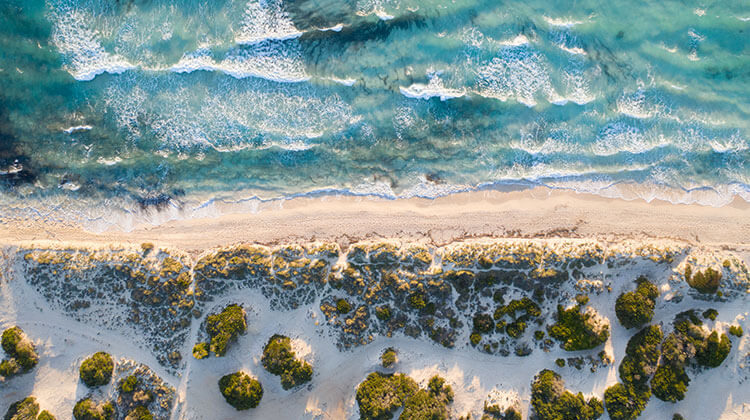
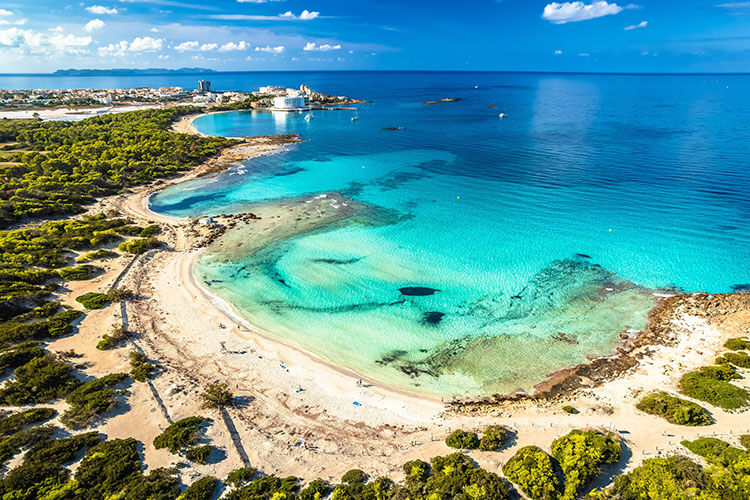
Es Trenc surprises even the most discerning travellers visiting Mallorca. Fine white sand, crystal-clear water in turquoise tones. It’s no wonder many people call it the island’s Caribbean beach.
But Es Trenc isn’t only impressive because it’s beautiful. When you arrive, you won’t see hotels, promenades or housing developments. Just golden dunes, the smell of salt in the air, and that open-space feeling. This natural setting is protected so that sense of freedom can remain.
About Es Trenc
All of Mallorca’s beaches stand out for their unique character, white sand and clear waters. But Es Trenc has something special – you feel it the moment you get there. Pale sand, open sea, an endless blue… and that wide, spacious shoreline that instantly slows you down.
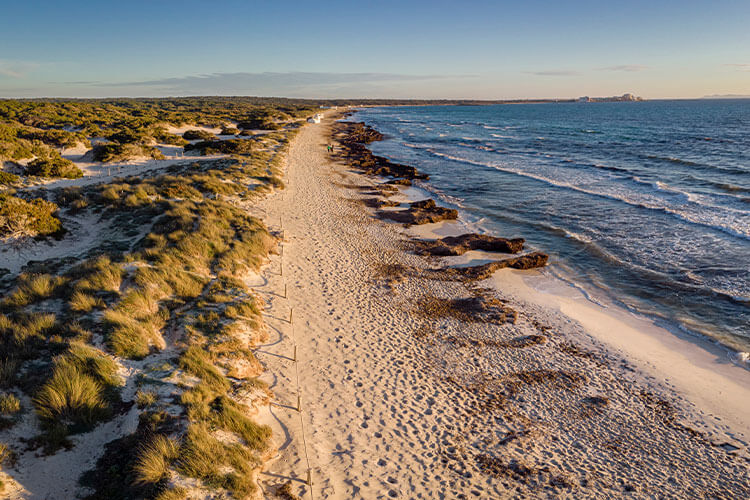
This beach, considered one of Mallorca’s most natural, lies in the south of the island, between Sa Ràpita, Ses Covetes and Colònia de Sant Jordi.
In Mallorquín, “Es Trenc” means a break or a split, and the name makes sense when you look at the landscape: a strip of sand and dunes separating the sea from the inland wetlands.
The key point is that Es Trenc isn’t just a beach. It’s part of the Parc Natural Marítimoterrestre d’Es Trenc – Salobrar de Campos, a protected area that brings together beach, dunes, wetlands, salt flats and a marine zone of major ecological value.
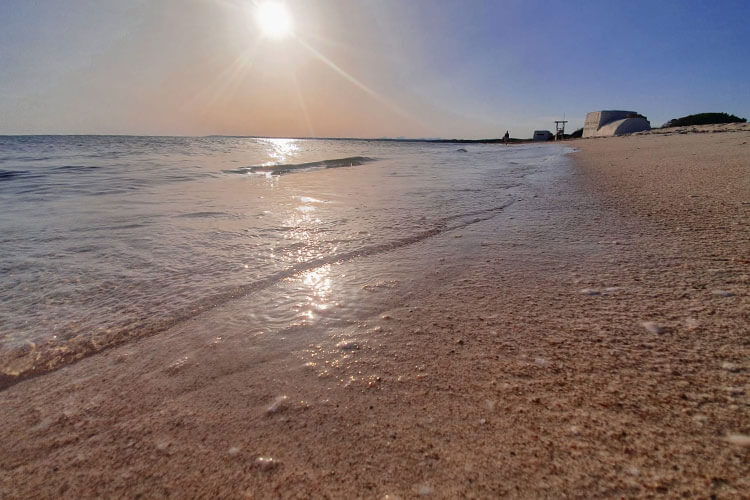
To give you a sense of scale: the Balearic Government’s management plan (PORN) protects 3,780.29 hectares in total (1,442 on land and 2,338.29 at sea). That’s why Es Trenc feels like something much bigger, it’s not just a beach, it’s an entire landscape.
Nature and biodiversity at Es Trenc
Dunes: the fragile system that supports everything else
Dunes do far more than they seem to: they help keep sand in place, slow erosion and protect the coastline. That’s why, when you visit, you’ll see:
- wooden walkways,
- marked-off areas,
- signs asking you not to step on vegetation.
None of this is there to “get in your way”, but to protect what makes Es Trenc unique. And it matters: according to an erosion study incorporated by the Government into the natural park law, since 1956 the beach has lost up to 30 metres in the most degraded areas. Along the ends of the analysed stretch (2,650 metres of coastline), the loss is between 20 and 30 metres1.
Underwater: posidonia and the secret behind the turquoise
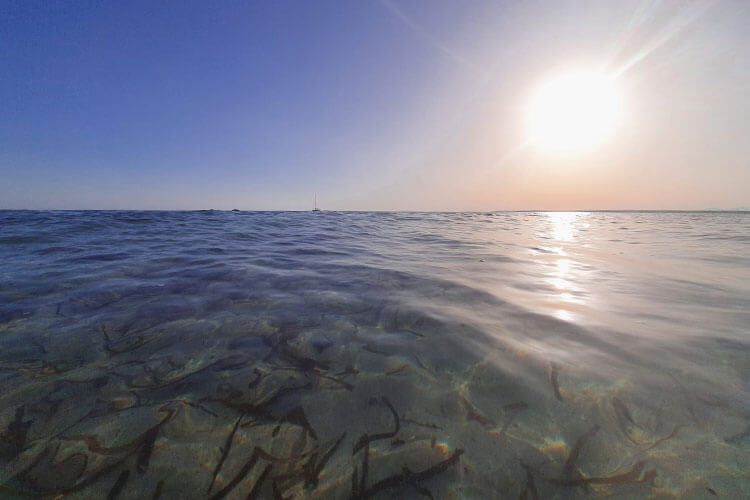
Sometimes the sea at Es Trenc looks so clear it almost seems to glow—and there’s a reason for that. Under the surface, meadows of posidonia oceanica grow: a Mediterranean seagrass that forms true underwater forests. These provide shelter for fish and invertebrates, act as nurseries for young marine life, and help stabilise the seabed by reducing suspended sediment. That “order” underwater contributes to the sea looking cleaner and brighter from the shore.
In recent years, scientists have discovered something surprising even for experts: posidonia can also trap plastics. A study by the University of Barcelona2 analysed beach samples in Mallorca and found that some waste becomes trapped and grouped into so-called “Neptune balls” (often seen washed ashore after storms).
According to that research, this process could retain hundreds of millions of plastic fragments a year in the Mediterranean. It doesn’t mean we can relax—rather, it’s a powerful image of an ecosystem quietly trying to filter what we leave behind.
Salobrar de Campos: the island’s quietest corner
Behind the sand of Es Trenc lies another Mallorca: calmer, more discreet, and full of life. Salobrar de Campos is a mosaic of dunes, fields and brackish lagoons linked to salt extraction. This landscape is protected for its ecological value (ANEI status) and today forms part of the Parc Natural Marítimoterrestre d’Es Trenc–Salobrar de Campos.
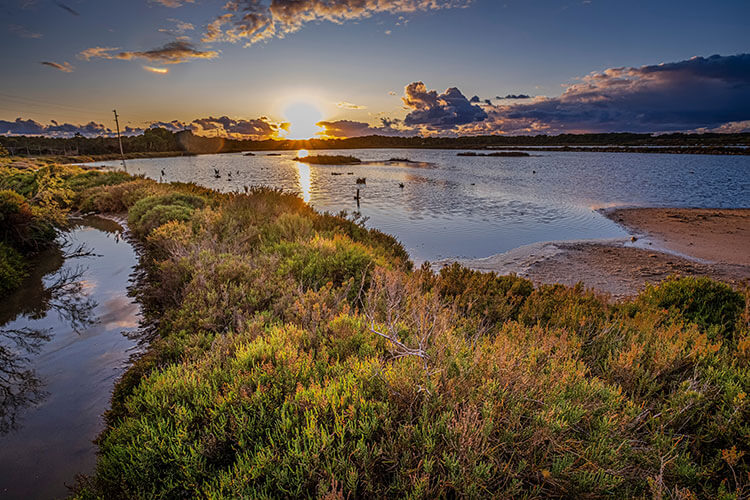
Here, mild weather, sea breezes and low humidity help the water evaporate naturally in the ponds, maintaining that very particular balance between active salt pans and wetlands.
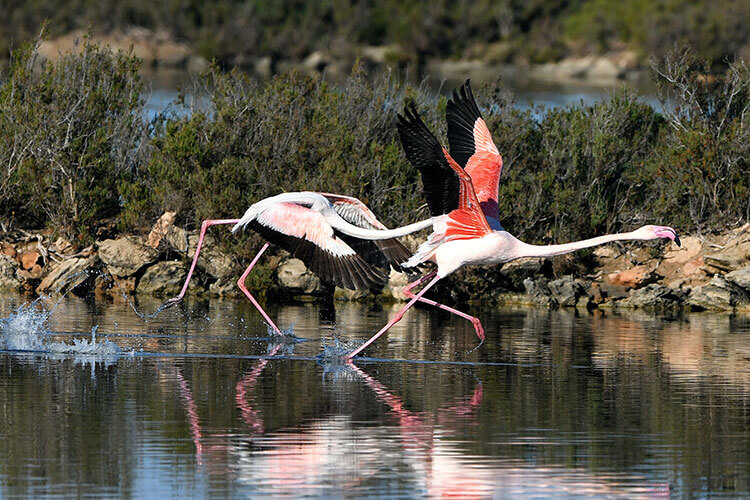
And then come the birds. Not as a figure of speech: it’s documented that 233 species had been recorded in the park (up to 2019.3 To experience it simply, put your towel down for a moment, walk slowly towards the wetland, and listen. On a good day you can spot waders such as avocets, stilts or little plovers, and also flamingos—and understand why this place is far more than “the famous beach”.
Salinas d’Es Trenc: living tradition (and very Mallorcan)
Just a few minutes from the beach, the scenery changes: from sea-blue you move into a world of calm water, bright light and piles of salt. Salinas d’Es Trenc aren’t just another thing to do; they’re part of the area’s identity. Here, the sea isn’t only something to admire—it’s slowly transformed by sun and wind.
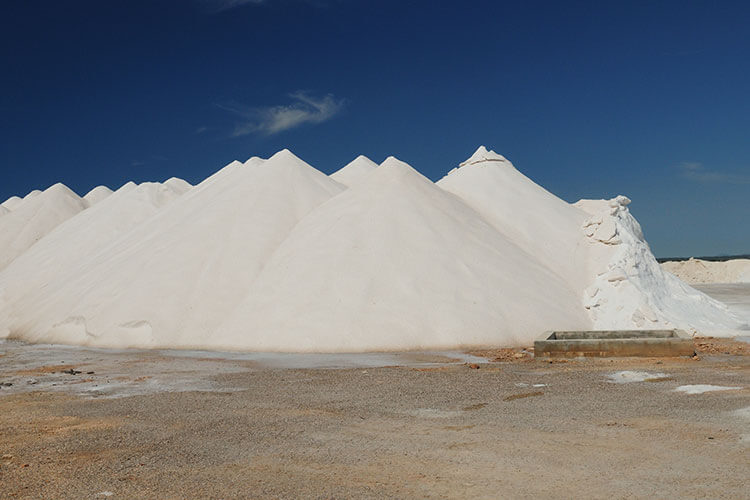
Salt extraction in south-eastern Mallorca is very old, but as we know it today, these saltworks began with the company’s foundation in 1958. Flor de Sal d’Es Trenc started being harvested and sold under that name in 2003.
And then there’s what any visitor can see even without the history: the process. A paper-thin layer of crystals forms on the surface and is carefully collected. Flor de sal keeps its natural character, with a delicate aroma and a notable presence of minerals and trace elements, such as magnesium.
If you want to see the process properly (and not only buy a pretty jar), the saltworks offer guided visits. Their website says the route takes around 50 minutes on foot, and that opening times and availability change with the season.
How to get to Es Trenc
The most common way is by car, your own or a rental. You can access it via the Campos or Ses Covetes areas, with parking in designated zones.
As with many popular natural areas, access and parking are more controlled. In practice, that means:
- In high season, arriving early helps a lot.
- If you see signs saying the car park is full or capacity has been reached, follow the directions.
You can also get there by public transport, combining a bus to nearby areas and then walking or taking a taxi. Keep in mind: routes and timetables vary by season.
Services, rules and safety
Es Trenc feels wild, but in season it usually has basic services: sunbed and parasol hire, toilets, beach bars, bins and cleaning.
If you prefer a calm day without worrying about queues or prices, it’s best to:
- bring enough water,
- take some food if you plan to stay for a few hours,
- and bring a parasol, because there’s no natural shade on the sand.
As for swimming, the water is often calm, but always check the flags and sea conditions.
And as a general rule inside the park: stick to the walkways, don’t pull up vegetation, don’t leave marked areas, and take everything you bring with you.
Best time to go (and why it changes so much)
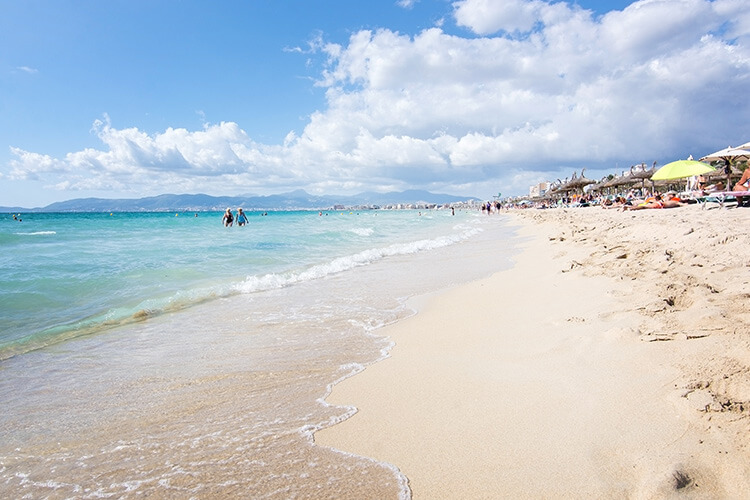
If you’re after a quieter experience, spring and early autumn are often the sweet spot: fewer people, gentle temperatures, and a wetland that can be especially active.
In July and August, the beach is still stunning, but the atmosphere changes: busier, and more pressure on access points. The good news is that Es Trenc is also at its best early in the morning or late in the day, when the light softens and the place becomes quieter.
FAQ
It’s in a protected setting and there are no large buildings right on the shoreline. That said, there are services in summer and it can get very crowded. So it’s more accurate to call it a natural beach within a protected park, rather than completely “unspoilt”.
Yes. There’s a nudist tradition and it’s common in some areas, although you’ll also find zones where people wear swimsuits.
Yes, especially in high season: parasol/sunbed hire and basic services.
In the Salobrar and saltworks area. If you’re interested, bring binoculars and take it slowly—the experience is completely different.
In high season it often fills up. The most practical thing is to arrive early and follow the capacity/occupancy signage.
Sources:
- https://www.diariodemallorca.es/part-forana/2019/02/04/playa-trenc-pierde-30-metros-2905919.html ↩︎
- https://www.ub.edu/portal/web/earth-sciences/detail/-/detall/posidonia-marine-seagrass-can-catch-and-remove-plastics-from-the-sea ↩︎
- https://ibdigital.uib.es/greenstone/sites/localsite/collect/anuariGob/index/assoc/AOB_2019/v34pdf.dir/AOB_2019v34.pdf ↩︎


Leave a Reply