

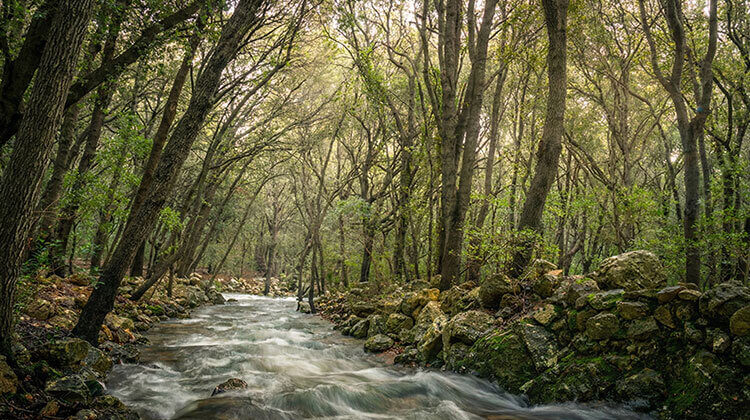
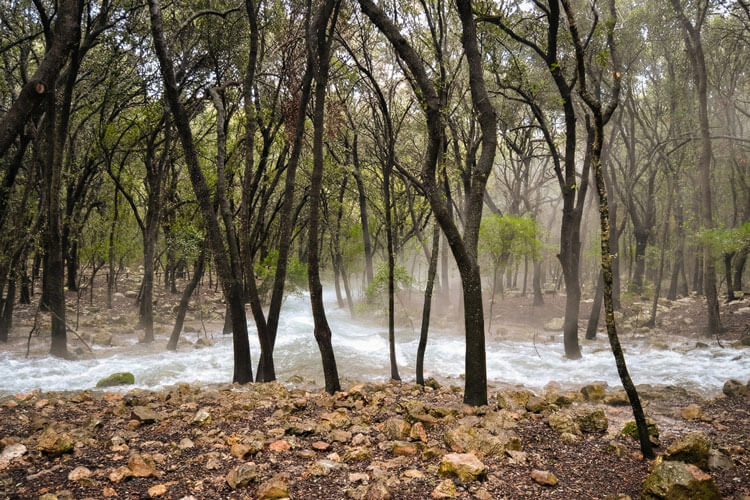
For a moment, the forest’s silence is broken. It isn’t the wind or a distant storm. It’s the earth beginning to breathe out. On the Gabellí Petit estate, the dry ground starts to bubble, the stones seem to inhale, and within minutes the calm woodland turns into a maze of improvised streams. Ses Fonts Ufanes is the place where Mallorca’s most fascinating hydrogeological phenomenon takes place.
What is the secret of Ses Fonts Ufanes?
This phenomenon appears only after heavy rainfall. Ses Fonts Ufanes is not an ordinary spring, but an intermittent resurgence that rises from the mountain’s limestone interior after intense downpours.
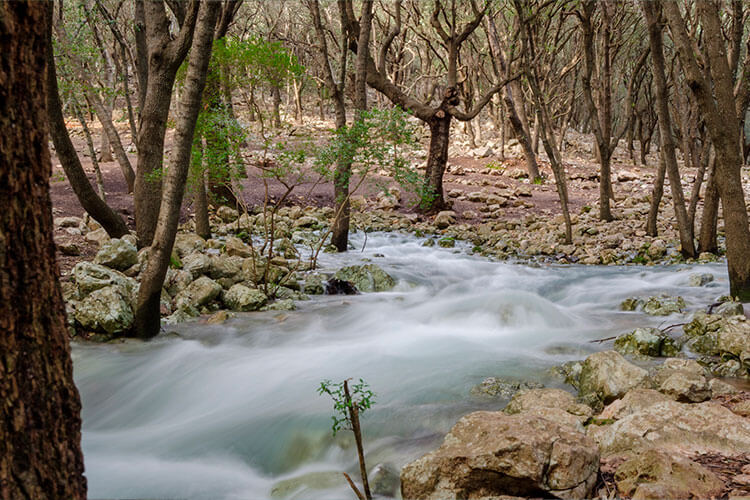
When Puig Tomir receives more water than the ground can absorb, the aquifer overflows. Water bursts out between roots and moss-covered stones, feeds the Torrent de Sant Miquel and transforms the landscape.
The force of the water is extraordinary: the flow can jump from 0 to 3 m³/s in just a few minutes, and it sometimes reaches peaks of up to 100,000 litres per second.
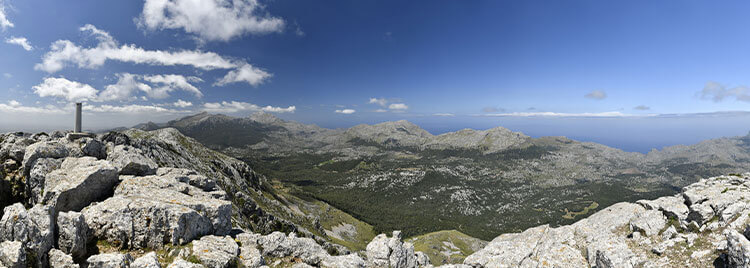
It’s not just a beautiful sight: the water replenishes the Pla de Sa Pobla aquifer and ultimately oxygenates the wetlands of s’Albufera de Alcúdia, completing a cycle that is vital for biodiversity in the north of the island.
Hiking to Ses Fonts Ufanes: when to go and what to expect
You can’t book a visit to Ses Fonts Ufanes. To see it, you need to plan ahead and have a bit of luck. It’s a brief phenomenon that may last for days—or only a few hours. Its unpredictability is precisely what makes it so special.
How to pick the right day
- The time window: the best period is from late autumn to early spring.
- The rain factor: a couple of clouds won’t do; you need a spell of heavy, persistent rain in the Puig Tomir area.
- Checking conditions: as there’s no official “traffic-light” indicator, the best strategy is to check local Mallorca news outlets or the social media channels of Espais Naturals de les Illes Balears the day after major storms.
What can you expect on the trail?
Visiting the estate today is a way to connect with a more authentic Mallorca. The Balearic Government bought it in 2005 to protect it, and Gabellí Petit now feels like an open-air museum. The 2.9-kilometre route is an easy path that takes you past:
- Talayotic remains: traces of the earliest inhabitants, who already recognised the sacred value of this place.
- Survival engineering: lime kilns and charcoal pits that reveal centuries of woodland use.
- The holm oak grove: a mature ecosystem where the air smells of earth and wet stone.
“When the springs rise, it will be a good year,” the village elders say. For Campanet, it’s an emotional sign: the promise that the island’s reserves are full.
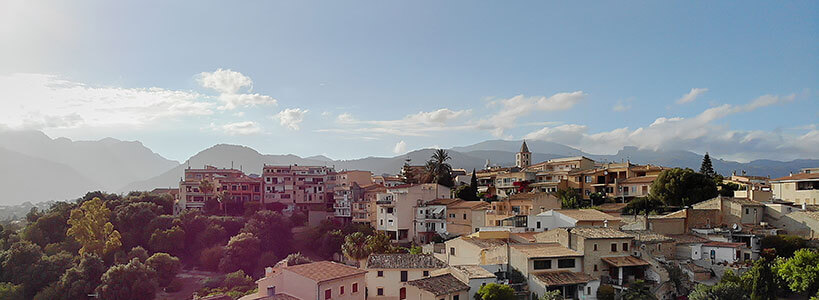
Tips for visiting Ses Fonts Ufanes
As it is a Natural Monument, you should respect the silence and keep to the marked paths—it’s a way of showing respect for nature.
And to help preserve this space, the Balearic authorities have set strict rules, especially on days when the water is flowing strongly.
- Ubicación: Campanet, Mallorca (Finca Gabellí Petit).
- Protección: Monumento Natural (50,2 hectáreas)
- Recorrido: circular, 2,9 km (dificultad baja)
- Horario: generalmente de 10:00 a 17:00 (sujeto a cambios institucionales)
- Mejor momento: 24–48 horas después de lluvias torrenciales en la Tramuntana.
Access and route
- Access is from the Oratory of Sant Miquel, where the clearly signposted trail begins. The circular route is 2.9 km long and very easy. It’s straightforward to follow and is often chosen by families.
- The full circuit usually takes around 45 minutes. But when the water is flowing, it’s normal to stop to watch or take photos, so the visit can last up to an hour and a half.
- The difficulty is very low, so children and people with little hiking experience can fully enjoy the visit.
- It’s important to wear shoes with a good grip and clothes you don’t mind getting dirty, as mud is often part of this natural spectacle.
How to get there and where to park
On days when the water is flowing, there are many more visitors and parking is limited. Plan your arrival in good time and check the parking rules to avoid fines.
If you’re driving, take the turn-off for the Coves de Campanet and follow the signs to the car park. Remember that yellow lines mean no parking and enforcement is strict.
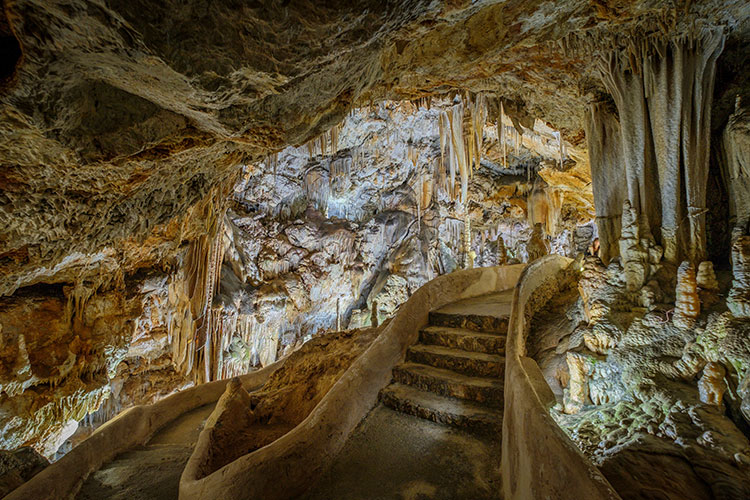
A tip: park at the Coves de Campanet, where there is available parking. Many visitors take the opportunity to see both places. If you buy a ticket for the caves, you can use the car park during your visit without any issue.
Public transport: you can take a bus to Campanet; from there, you’ll need to walk 3 km to the site. It’s a good option for those who enjoy slow travel and prefer exploring on foot.
Frequently asked questions (FAQ)
There’s no total guarantee. The phenomenon requires a specific level of aquifer saturation. That’s part of nature’s game.
As it is a protected Natural Monument, there are restrictions. Generally, dogs must be kept on a lead and you must always follow the current regulations for the protected area.
Absolutely not. Motorised access is restricted to management and emergency services. The experience is—and should be—on foot.
Summary
In a world where everything is instant, Ses Fonts Ufanes teaches us to wait. It reminds us that the water cycle is fragile, and that we are merely spectators of a geological choreography thousands of years in the making. Walking through this woodland when the water rises isn’t just a hike; it’s witnessing the living pulse of an island that, sometimes, reveals its purest strength.


Leave a Reply